

What Is a Hall Effect Joystick? 4 Core Principles, Applications, and Purchasing Tips
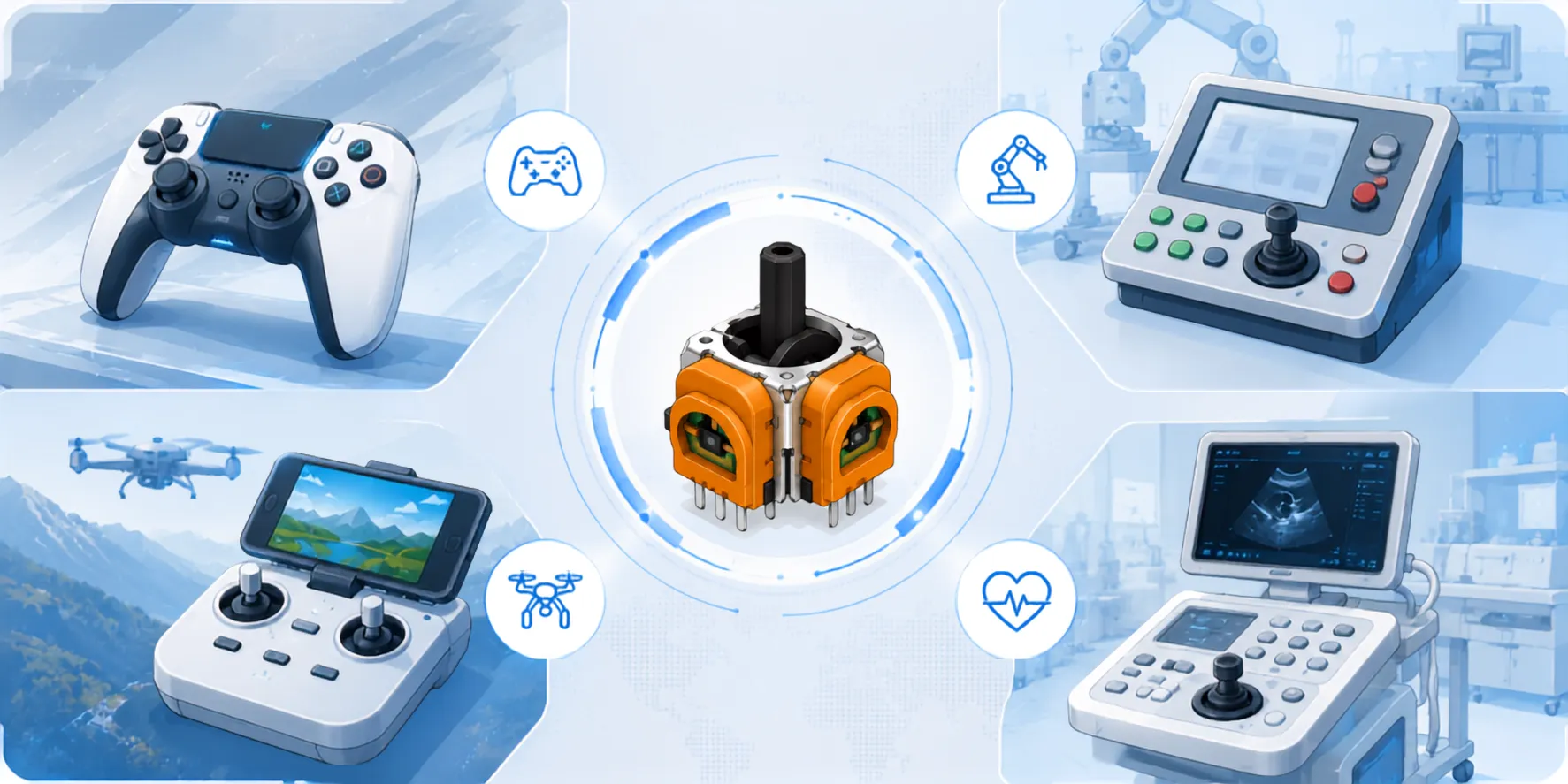
Hall effect joysticks are commonly used in game controllers, industrial control panels, drone controllers, and precision medical equipment. Compared with traditional potentiometer joysticks, Hall effect joysticks use magnetic sensing technology to detect displacement through magnets and sensors, reducing wear, poor contact, and signal irregularities caused by friction between wipers and carbon tracks.
However, Hall effect joysticks are not completely immune to drift. Their actual stability still depends on factors such as magnet configuration, mechanical centering, temperature compensation, circuit design, and firmware calibration. This article explains how Hall effect joystick sensing works, five common causes of inaccurate input, four major application areas, and three key B2B sourcing considerations to help engineering, R&D, and procurement teams evaluate product specifications, application requirements, and supplier capabilities.
What Is a Hall Effect Joystick? Understanding Non-Contact Magnetic Sensing
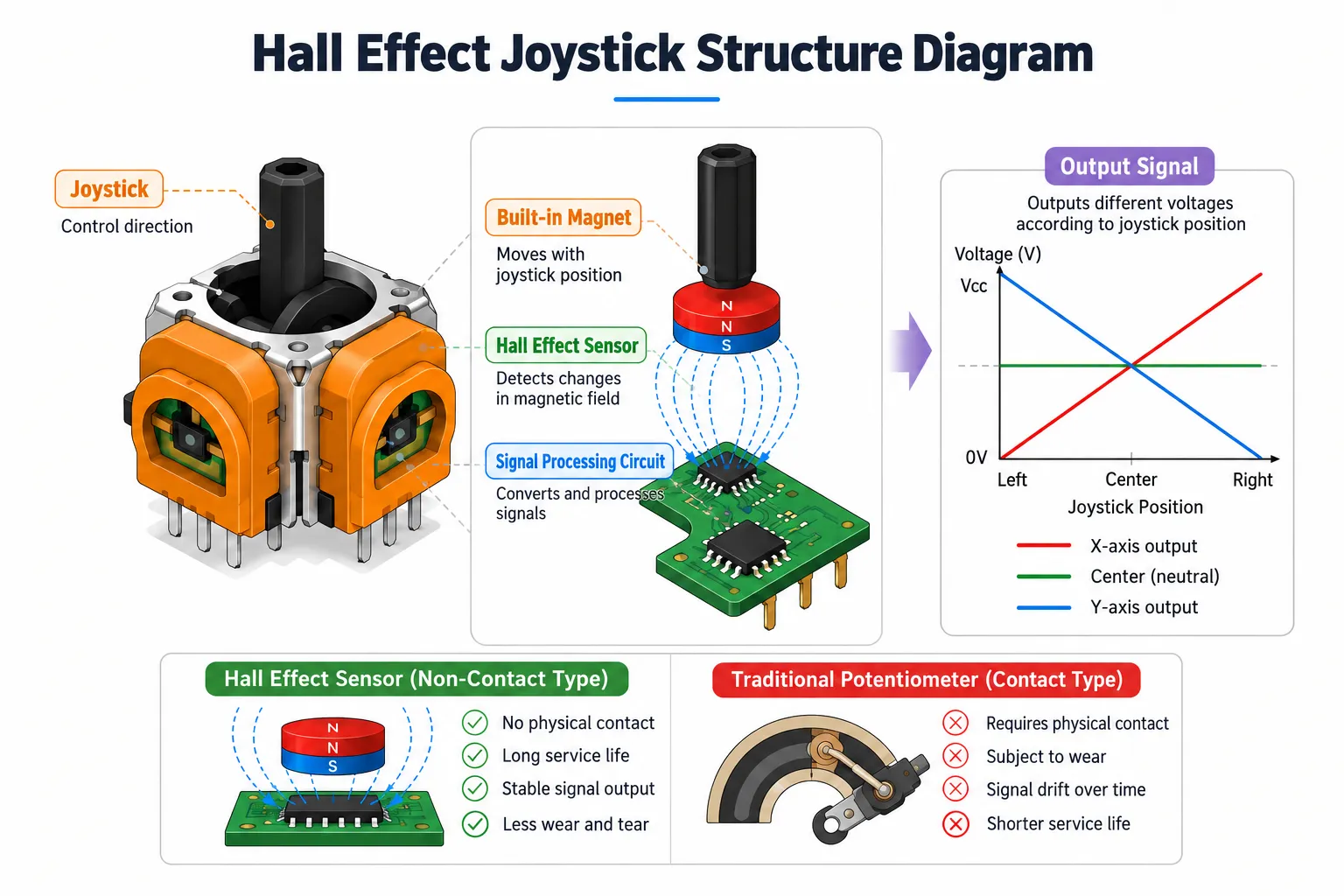
A Hall effect joystick is a control input device that uses the Hall effect as its core sensing mechanism. The underlying physical principle is that when a conductive material carrying an electric current is placed in a magnetic field, the charge carriers are deflected by the Lorentz force, creating a transverse voltage difference. This phenomenon was discovered by American physicist Edwin Hall in 1879 and became known as the Hall effect.
In joystick applications, Hall effect sensors and permanent magnets form a non-contact sensing structure. When the operator moves the joystick, the magnet shifts relative to the fixed Hall effect sensor, causing changes in the strength and direction of the magnetic field. The sensor converts these magnetic-field changes into corresponding voltage signals. After signal processing by the associated circuitry, the system can accurately determine the joystick’s displacement and direction.
Compared with traditional potentiometer joysticks, which rely on physical contact between a carbon resistive track and a metal wiper, Hall effect joysticks eliminate mechanical contact within the sensing mechanism. This structural difference helps address issues such as carbon-track wear, poor electrical contact, and the accumulation of conductive debris, significantly improving product lifespan and long-term operational stability. As explained in Texas Instruments’ Joystick and Lever Design With Hall-Effect Sensors application note, strategically positioning magnets and Hall effect sensors can eliminate contact-based components that wear over time.
Can Hall Effect Joysticks Drift? Long-Term Stability, Error Sources, and Engineering Validation
Although Hall effect joysticks can significantly reduce the risk of joystick drift, this does not mean they are completely immune to accuracy issues. Their main advantage is eliminating signal problems caused by carbon-track wear and poor wiper contact in traditional potentiometer joysticks. Actual long-term stability still depends on factors such as magnet positioning, mechanical centering, temperature compensation, circuit design, and firmware calibration.
Simply put, Hall effect joysticks address drift caused by contact-based wear, but they do not eliminate every possible source of inaccuracy. For B2B procurement and engineering integration, evaluation should go beyond whether a joystick uses Hall effect technology. It is also important to verify whether the product has undergone lifecycle testing, temperature testing, linearity verification, and center-point calibration to determine whether it can maintain stable performance over long-term use.
So, under what conditions can a Hall effect joystick still become inaccurate? From an engineering perspective, there are five key factors:
- Magnet-to-Sensor Air Gap: The air gap between the magnet and Hall effect sensor affects output linearity and dynamic range. If the distance is too small, the sensor may become saturated or produce signal distortion. If the distance is too large, insufficient magnetic field strength may reduce resolution and signal stability.
- Mechanical Centering Error: Whether a joystick accurately returns to its center position depends not only on the sensor but also on the spring, shaft, pivot structure, and component tolerances. Spring fatigue, mechanical wear, or excessive assembly variation may cause a small residual displacement signal even after the joystick is released.
- Temperature Drift: Temperature changes can affect the magnet’s magnetic flux density, the electrical characteristics of the Hall effect IC, and the thermal expansion of mechanical components, potentially altering the output signal. For outdoor, automotive, or industrial applications, it is important to confirm whether temperature compensation is incorporated into the design.
- External Magnetic Interference: Hall effect sensors inherently detect magnetic fields. Nearby motors, transformers, high-current wiring, or magnetic materials may therefore affect sensor readings. Proper component placement, spacing, and magnetic shielding should be considered during system-level design.
- Insufficient Circuit and Firmware Calibration: ADC resolution, power-supply stability, filtering, center dead-zone settings, factory calibration, and temperature-compensation algorithms can all affect actual control feel and long-term stability. For industrial applications, it is recommended to confirm whether the supplier can provide calibration support and relevant test data.
Hall Effect Joystick Applications and Selection: Requirements Across Different Industries
| Application Industry | Common Applications | Core Requirements | Key Selection Criteria |
|---|---|---|---|
| Consumer Electronics | Game controllers, flight simulators, VR devices | Low latency, high responsiveness, smooth control feel | Center return, operating feel, signal stability |
| Industrial Control Equipment | Control panels, cranes, aerial work platforms, automated machinery | Wear resistance, oil resistance, vibration resistance, long service life | IP rating, output interface, operating resistance, lifecycle testing |
| Unmanned Systems & Defense Applications | Ground control stations, special vehicle controllers, military-grade control interfaces | Wide temperature range, vibration resistance, water and dust resistance, supply chain compliance | IP67 / IP68, interference resistance, non-red supply chain, Made in Taiwan |
| Medical & Precision Equipment | Medical imaging equipment, precision measuring instruments, fine-control interfaces | High repeatability, low latency, safety redundancy | Dual-channel signals, center-point calibration, quality certification |
As shown in the table above, the key considerations for adopting Hall effect joysticks vary across industries. The following sections explain the practical requirements of each application scenario to help engineering and procurement teams determine whether a joystick’s specifications meet their product requirements.
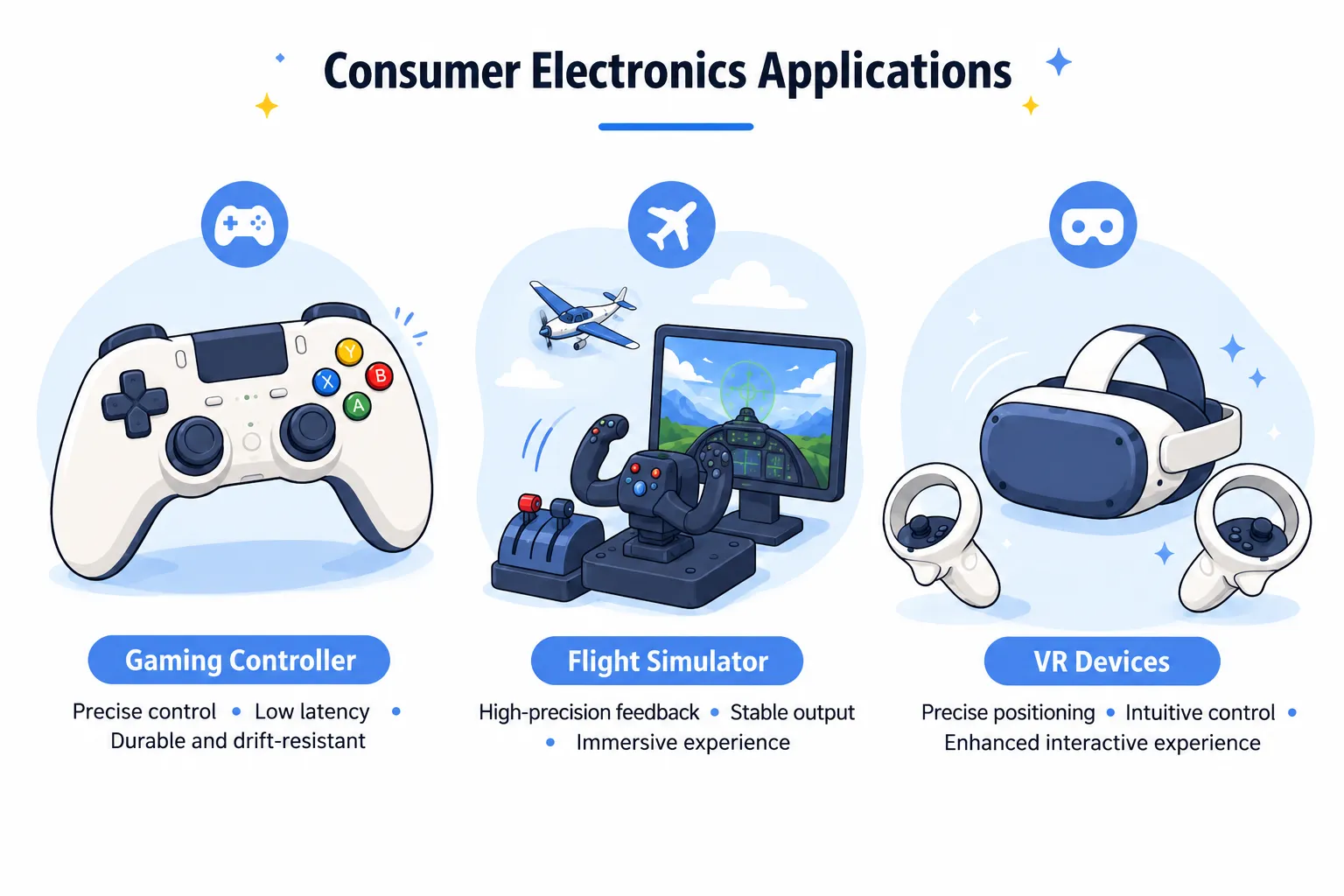
Consumer Electronics:Game Controllers and VR Devices
In game controllers, flight simulators, and VR devices, Hall effect joysticks are primarily used to improve service life and reduce drift under frequent operation. These applications place particular emphasis on low latency, reliable return-to-center performance, and smooth response curves, making Hall effect joysticks well suited for products that require extended use and precise control.
For example, Favor Union’s competitive gaming joystick modules incorporate high-precision Hall effect joystick components and are tuned for competitive control feel for leading global gaming brands. Multiple delivery configurations are available, including pin terminals, flat cables, flexible printed circuits (FPC), and PCB assemblies. Direct manufacturer support also enables closer coordination with product design teams to maintain consistent performance parameters. Proven through extensive real-world use by hundreds of millions of players worldwide over the years, these joystick modules are designed to support long gaming sessions and applications requiring precise control.
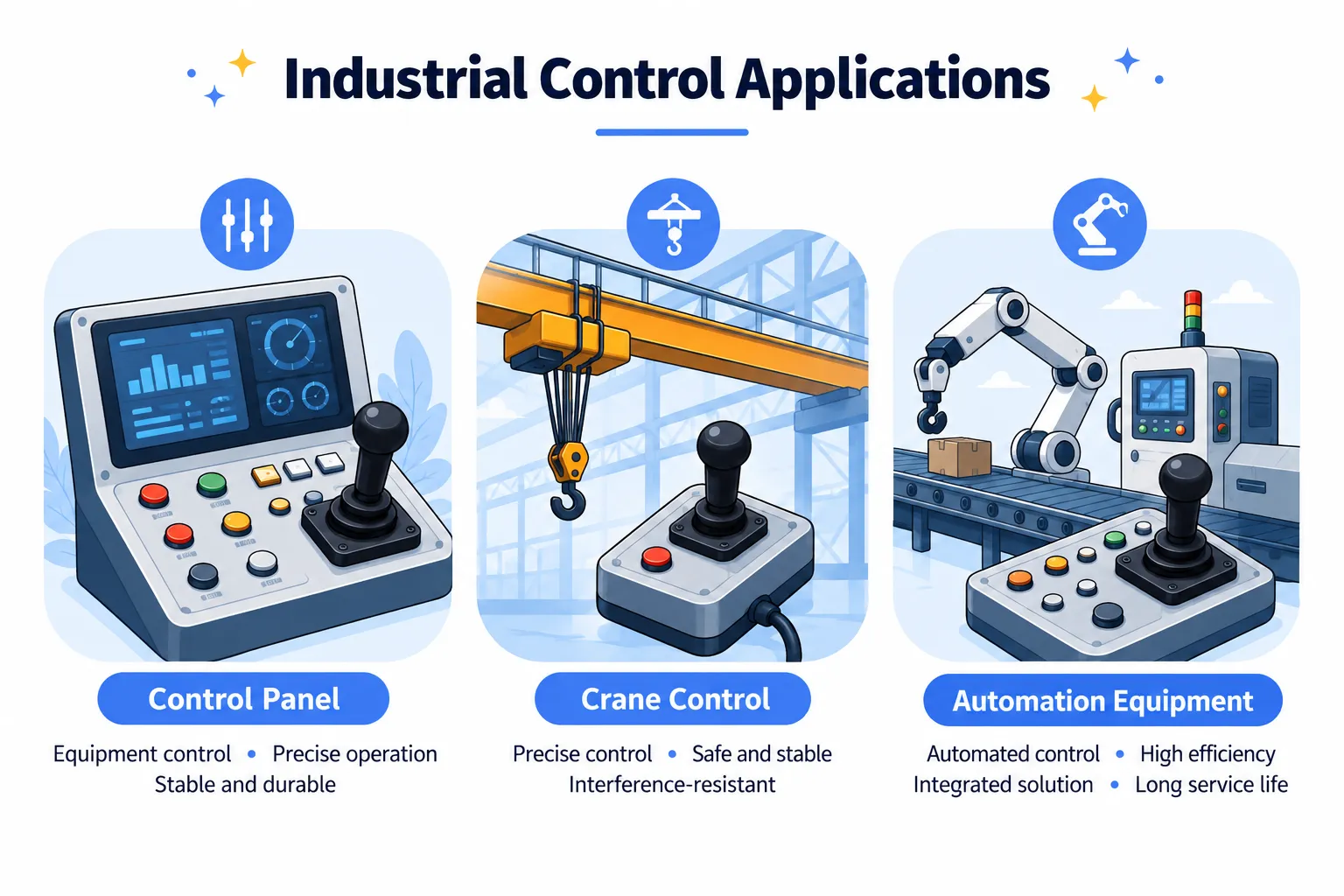
Industrial Control Equipment:
Control Panels, Cranes, and Automated Machinery
Industrial control panels, remote control levers, aerial work platforms, and automated machinery often operate in environments exposed to dust, oil, vibration, and prolonged operation. When selecting a joystick for these applications, it is important to consider not only sensing accuracy but also the IP rating, operating resistance, lifecycle testing, and output interfaces, such as analog voltage, current, CAN bus, or USB.
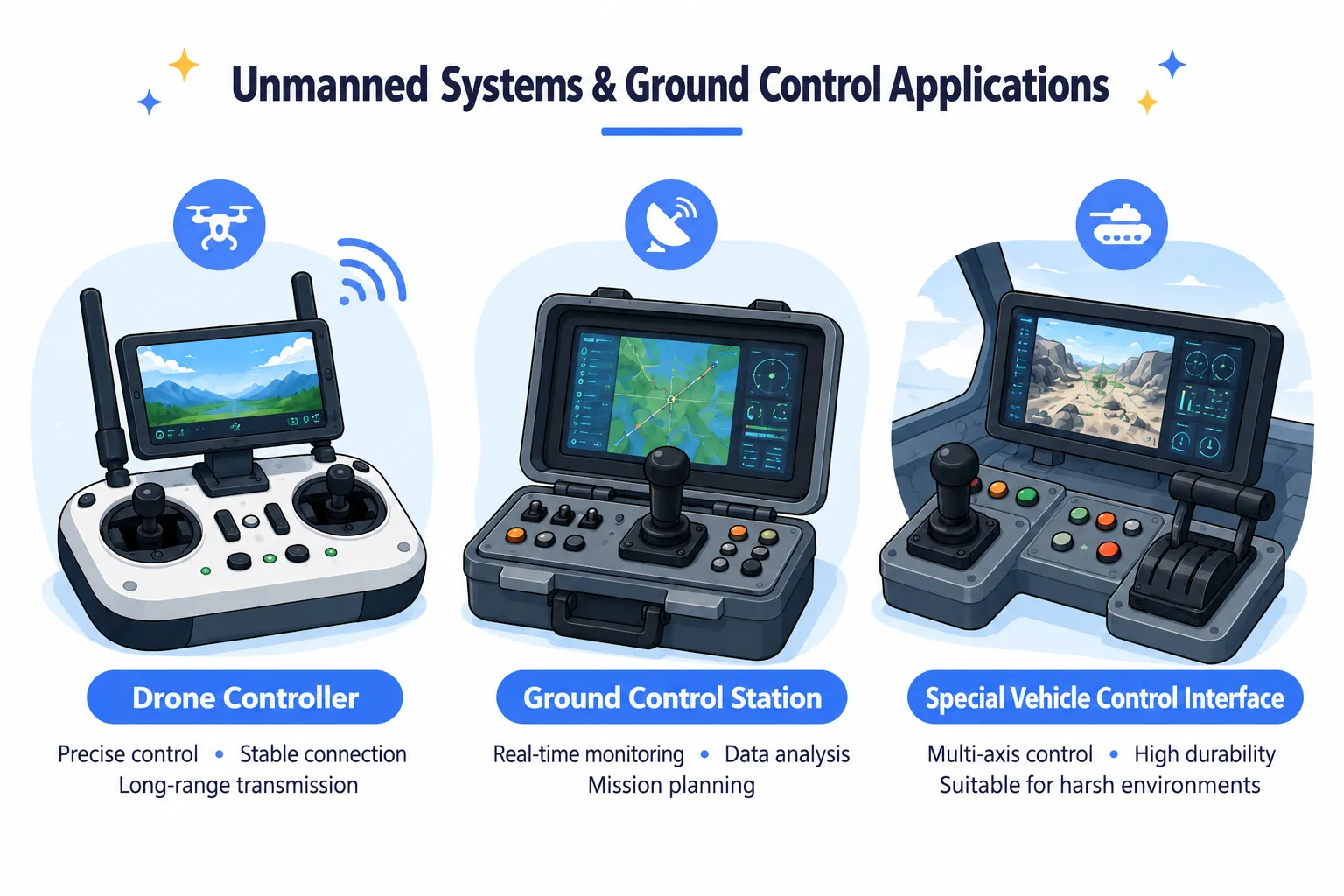
Unmanned Systems and Defense Applications: Ground Control Stations and Special Vehicle Interfaces
Drone ground control stations and defense vehicle control interfaces often need to operate under high vibration, extreme temperatures, high humidity, and outdoor conditions. For these applications, key considerations include IP67 / IP68 protection, vibration-resistant design, interference resistance, China-independent supply chain options, Made in Taiwan (MIT) manufacturing, and long-term supply availability.
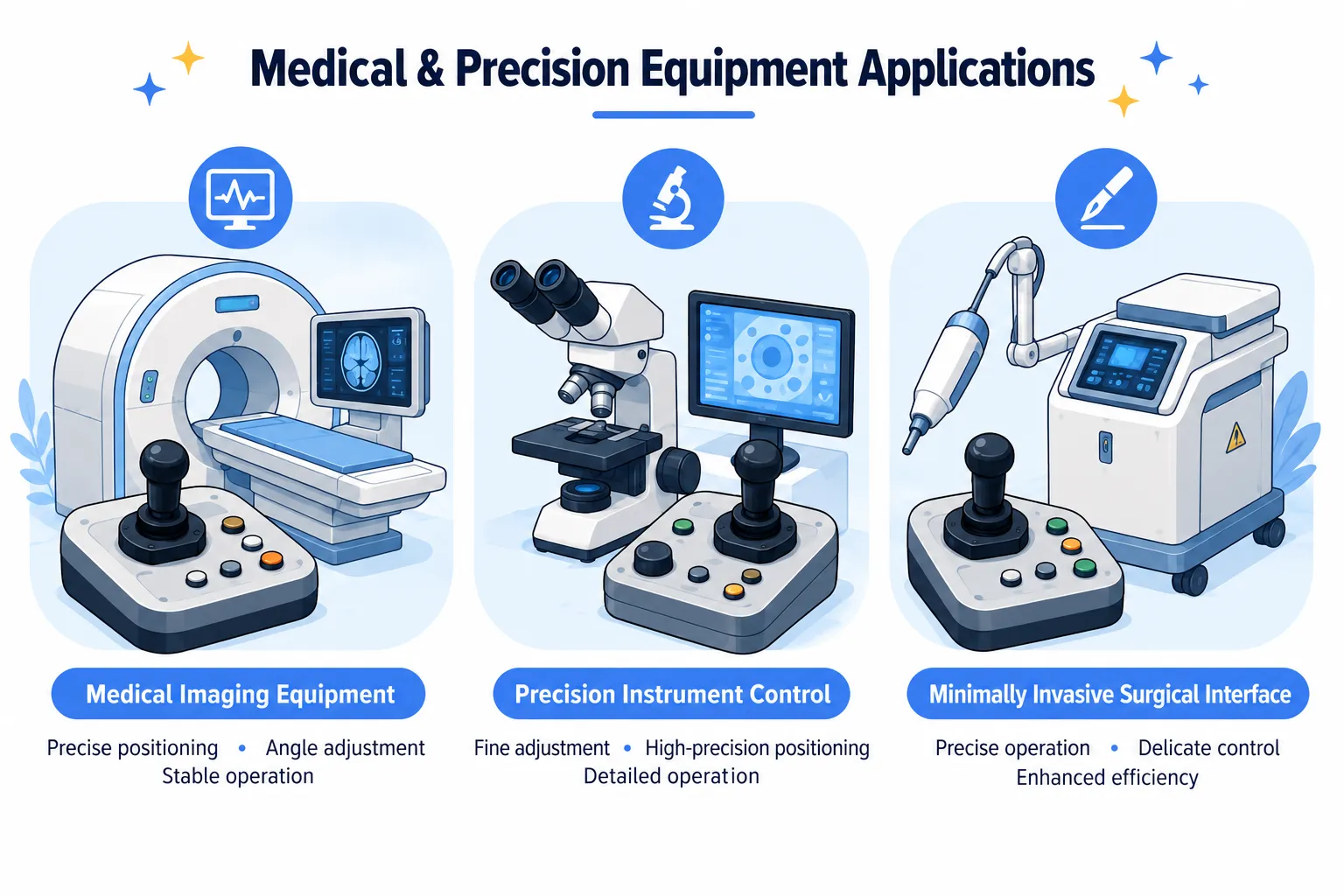
Medical and Precision Equipment: Medical Control Systems and Precision Instruments
Medical imaging equipment, precision measuring instruments, and fine-motion control interfaces require high levels of signal stability, repeatability, and safety. For these applications, Hall effect joysticks with low hysteresis, dual-channel signal outputs, center-point calibration, and quality validation can be considered to reduce the risk of signal variation over long-term use.
How to Choose a Hall Effect Joystick: Key B2B Sourcing and Engineering Considerations
From consumer-grade gaming controllers to heavy-duty industrial machinery, Hall effect joysticks are used across a wide range of applications.
To ensure successful project implementation and long-term reliability, hardware R&D and procurement teams should consider the following key factors when selecting Hall effect joysticks and evaluating potential suppliers:
What Specifications Should You Consider When Selecting a Hall Effect Joystick?
- Resolution and Output Signals: Confirm compatibility with the MCU interface requirements, such as analog voltage, current, SPI, I²C, CAN bus, or USB.
- Power Supply Requirements: Check the operating voltage, allowable tolerance, and power stability to prevent voltage fluctuations from affecting output accuracy.
- Operating Angle and Center Dead Zone: Verify that the joystick travel, center-point output, and dead-zone settings meet the application requirements.
- Dimensions and Mounting Method: Confirm that the overall dimensions, mounting holes, number of axes, magnet position, and sensor configuration can be integrated into the existing mechanical design.
- Environmental Resistance: Evaluate the operating temperature range, vibration resistance, water and dust resistance, IP rating, and lifecycle testing requirements.
What Should You Consider When Evaluating a Joystick Supplier?
- Direct Manufacturer: Working directly with the manufacturer provides greater control over quality, lead times, and production adjustments while reducing communication barriers.
- Customization Capabilities: Evaluate whether the supplier can customize operating angles, spring resistance, control feel, output signals, and structural tolerances.
- Quality Certifications: Certifications such as ISO 9001, ISO 14001, and IATF 16949 can help demonstrate consistent quality management across production batches.
- Long-Term Supply Capability: Industrial equipment often has a long product lifecycle, so suppliers should be able to provide long-term product availability and reduce the risk of redesign and requalification caused by discontinued components.
- Engineering Support: Suppliers that can support EVT/DVT validation, sample testing, and troubleshooting are generally better suited for long-term development projects.
Why Choose an Industrial-Grade Manufacturer? Favor Union
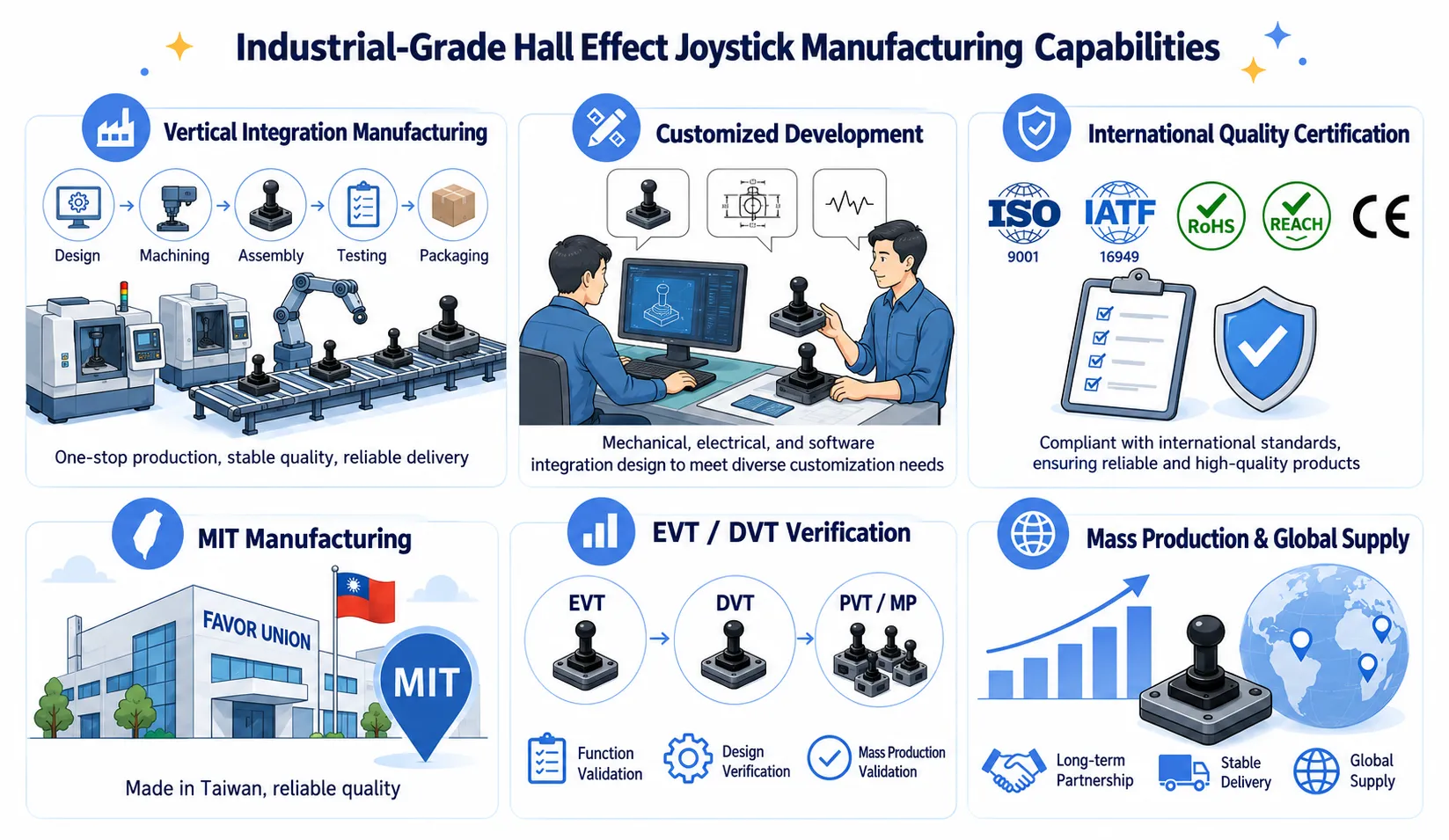
For companies looking for an industrial-grade Hall effect joystick supplier, manufacturers with vertically integrated production, customization capabilities, and long-term supply support are worth evaluating. Favor Union has more than 40 years of experience in joystick development and manufacturing, with products covering industrial controls, medical equipment, automotive electronics, gaming, VR/AR, drones, and defense-related applications. Key capabilities include:
- Vertically Integrated Manufacturing: A high level of in-house production helps maintain control over product quality and lead times.
- Customized Development: Operating angles, tolerances, mechanical structures, and control feel can be adjusted according to application requirements.
- International Quality Certifications: Quality management systems comply with ISO and IATF standards, supporting applications in industrial, automotive, and high-end electronic equipment.
- Made in Taiwan (MIT) Options: Taiwan-based manufacturing can support China-independent or diversified supply-chain requirements for drone, defense, and high-end industrial applications in Europe and North America.
- Mass Production and Application Experience: Products can be integrated into a wide range of applications, including industrial controls, gaming, VR, and unmanned systems.
- EVT/DVT Validation Support: Engineering support is available from specification discussions and sample testing through mass-production implementation, helping reduce development risks.
To learn more about Hall effect joystick selection, please submit your requirements. Our technical team can provide product selection consultation, sample validation, and implementation support based on your product specifications, application requirements, and mass-production needs.
Recommended Reading: