

According to the EU's Personal Data Protection Law, we are committed to protecting your personal data and providing you with control over your personal data.
By clicking "Accept All", you agree to allow us to place cookies to enhance your experience on this website, assist us in analyzing website performance and usage, and enable us to deliver relevant marketing content. You can manage your cookie settings below. Clicking "Confirm" indicates your agreement to the current settings.
News
2026.06.26
Technology News
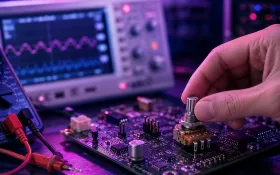
What Is a Variable Resistor? A Complete Guide to Its Principle, Wiring, Specifications, and Measurement Methods
How Do You Choose the Right Variable Resistor?
This article explains the operating principles, types, applications, wiring methods, selection specifications, and measurement methods of variable resistors, helping businesses better understand the key considerations in circuit design, component selection, and supplier evaluation.
2022.06.24
Technology News
What is thick film printing?
Currently, this technology has become quite mature and can be printed on various substrates, from high-temperature ceramics to common FR4 materials, or polyimide (PI) flexible materials. The resistance can range from 10 ohms/square to 100K ohms/square (resistance value), with a maximum resistance value of up to 100M ohms and a tolerance of +/-10%. Thick film printing will be printed on the etched copper outer layer and cured in standard convection ovens, infrared ovens, or hot air ovens, and then laser trimming will be used to adjust the resistance to achieve tight tolerances.
2021.07.02
Technology News
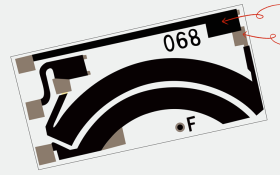
Introduction to the functions of thick film printing
Thick film printing technology uses screen printing or steel plate printing methods to print conductive, resistive, and insulating ink materials on the surface of substrates. Depending on the applications in different industries, the substrates can be categorized into various materials such as ceramics, aluminum nitride, and enamel. Among them, ceramic substrates are the most commonly used material for thick film printing, and due to the good thermal conductivity and heat resistance properties of ceramic substrates, they are often used in products with high heat generation and high energy.
2021.06.25
Technology News
What is a 5mm encoder?
An encoder is a device that encodes signals or data, converting them into a signal form that can be used for communication, transmission, and storage. The encoder converts angular displacement or linear displacement into electrical signals.