

How Do Joysticks Work? Comparing 3 Analog Joystick Technologies: Hall Effect, TMR, and More
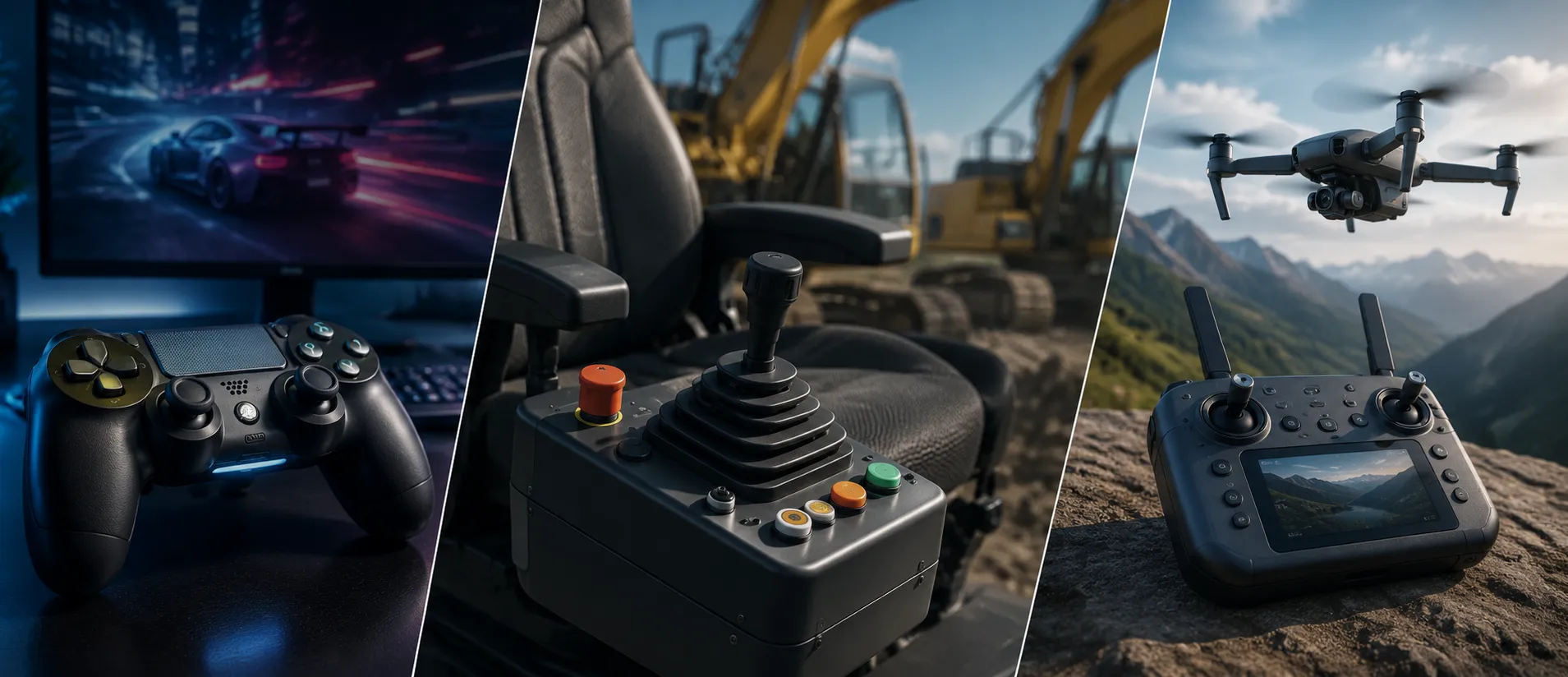
A joystick may seem like a small control component, but it can directly affect control precision and the overall operating feel.
Whether used in gaming, industrial equipment, or professional applications, differences between analog joystick technologies can significantly influence the user experience and product stability.
These differences also play an important role when selecting the right joystick for a specific application.
This article will first explain how joysticks work and then introduce the most common analog joystick technologies, including carbon-film, Hall effect, and TMR joysticks.
By comparing their key differences and characteristics, you can better understand each technology and make a more informed product selection.
How Do Joysticks Work?
Understanding Joystick Principles and Applications
In modern human-machine interfaces, the joystick plays an essential role. By converting physical movement into digital commands, it functions as an input device that translates hand movements into system signals. When we move a joystick, what appears to be a simple action actually involves precise sensing and signal-processing mechanisms.
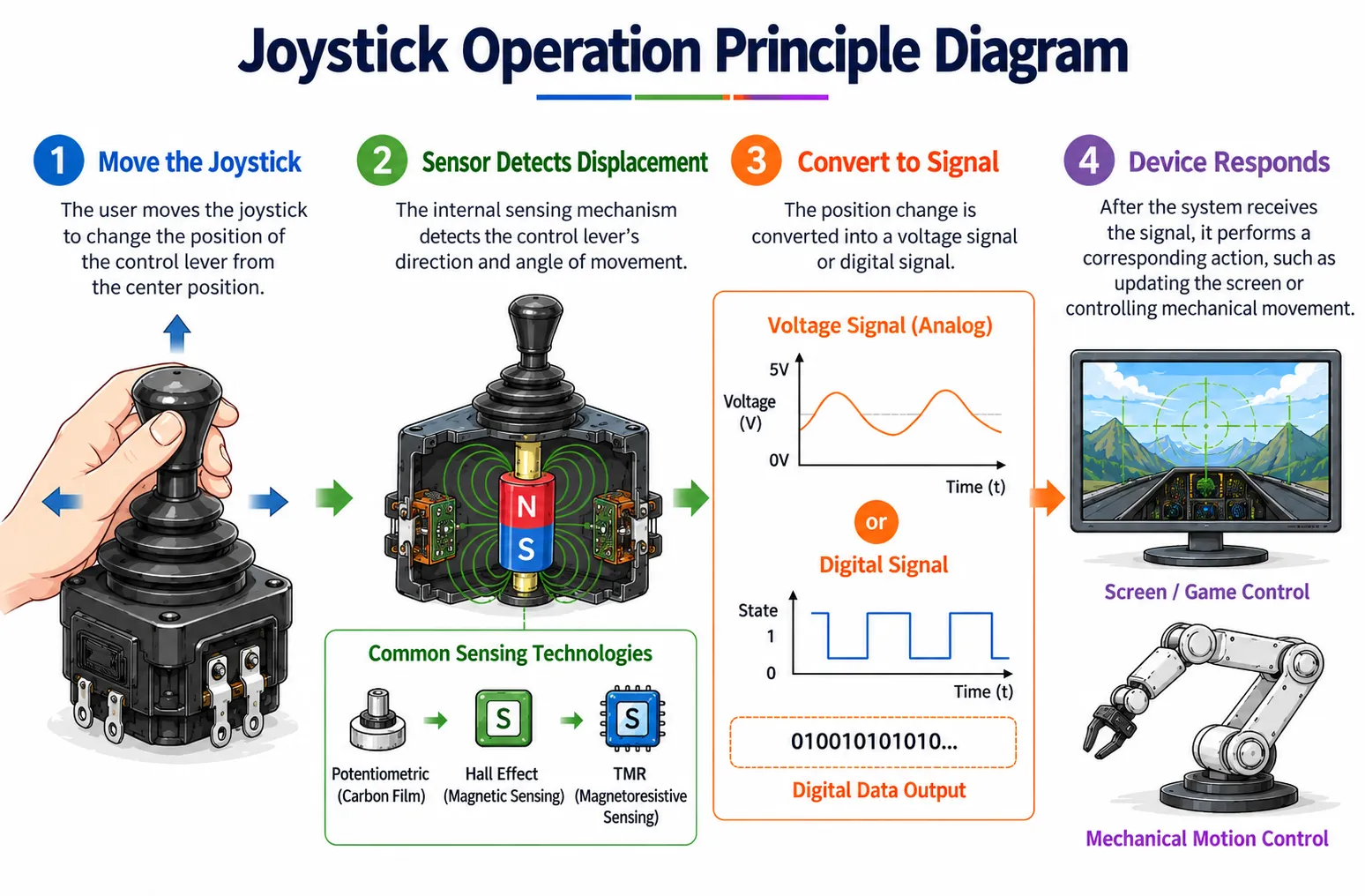
The core structure of a joystick consists of a fixed base and a control lever. When the lever moves away from its center position, the internal sensing mechanism detects the direction and angle of movement in real time. It then converts this displacement into voltage changes or digital signals and sends them to the host system, allowing on-screen or mechanical movements to respond accordingly.
Depending on the sensing technology used inside the joystick, the most common signal-conversion principles can generally be divided into the following three types:
-
Potentiometric (Carbon-Film) Sensing: The joystick moves a physical contact point across a carbon-film substrate, changing the contact position and resulting in a change in resistance. The system measures this resistance change and converts it into a sensing signal.
-
Hall Effect (Magnetic) Sensing: The joystick contains a permanent magnet and a Hall effect sensor. When joystick movement causes the magnet to shift, the surrounding magnetic field changes. The sensor detects this change and produces a voltage shift (Hall voltage), which is then converted into position data.
-
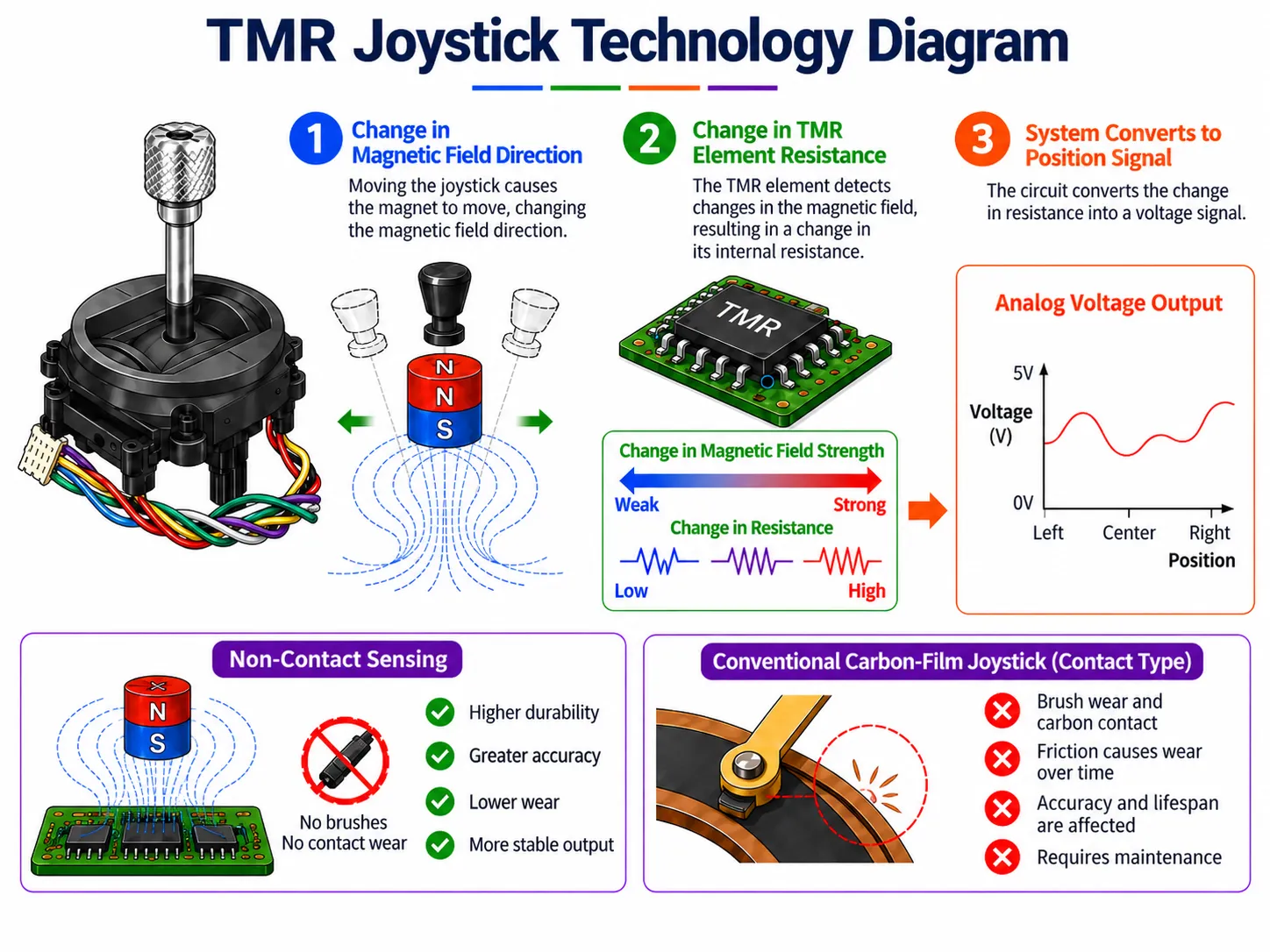
TMR (Tunnel Magnetoresistance) Sensing: TMR is a non-contact magnetic sensing technology based on the quantum tunneling effect. When joystick movement shifts the magnet, the resistance of the sensing element changes according to the direction of the magnetic field. The system then converts these resistance variations into joystick position data and digital signals.
Because joysticks can simultaneously process directional and force inputs, they provide intuitive and precise control. As a result, their applications extend far beyond entertainment into a wide range of professional fields:
-
Game Controllers: Perhaps the most familiar application, joysticks are widely used in analog gamepad controls, arcade fighting sticks, and VR motion controllers, providing precise control over movement and viewing angles.
-
Aviation and Flight Simulation: From commercial aircraft to military jets, pilots use side-sticks or center-sticks to control aircraft attitude. Joysticks are also essential for creating a realistic control experience in flight simulators.
-
Industrial and Heavy Machinery: In excavators, cranes, underwater robots, and other heavy-duty equipment, rugged electronic joysticks have increasingly replaced traditional mechanical control levers and become a key interface for hydraulic control systems.
-
Medical Assistance: For users with limited mobility, miniature joysticks can provide an alternative way to control computers without a mouse. They are also commonly used to operate powered wheelchairs, providing intuitive navigation and greater independence.
What Is an Analog Joystick? Analog vs. Digital Joysticks Explained
An analog joystick (analog stick) determines the direction and intensity of an input based on how far and at what angle the stick is moved away from its center position. It is most commonly used in gaming to control character movement or camera views, providing more intuitive and precise control.
Compared with switch-based digital controls, the key difference is that an analog joystick can continuously detect changes in displacement. D-pads and microswitch joysticks typically determine direction based on simple “pressed/not pressed” states and generally provide fixed inputs such as up, down, left, and right. Hall effect and TMR joysticks, on the other hand, detect X- and Y-axis displacement through changes in the magnetic field and output continuous values, allowing the system to determine both the angle and magnitude of joystick movement.
This enables users to control the intensity of an action based on how far the joystick is pushed—for example, moving slowly with a slight push and moving quickly when the stick is pushed fully—providing smoother and more precise 360-degree control.
What Is a Carbon-Film Joystick? How It Works, Advantages, and Disadvantages
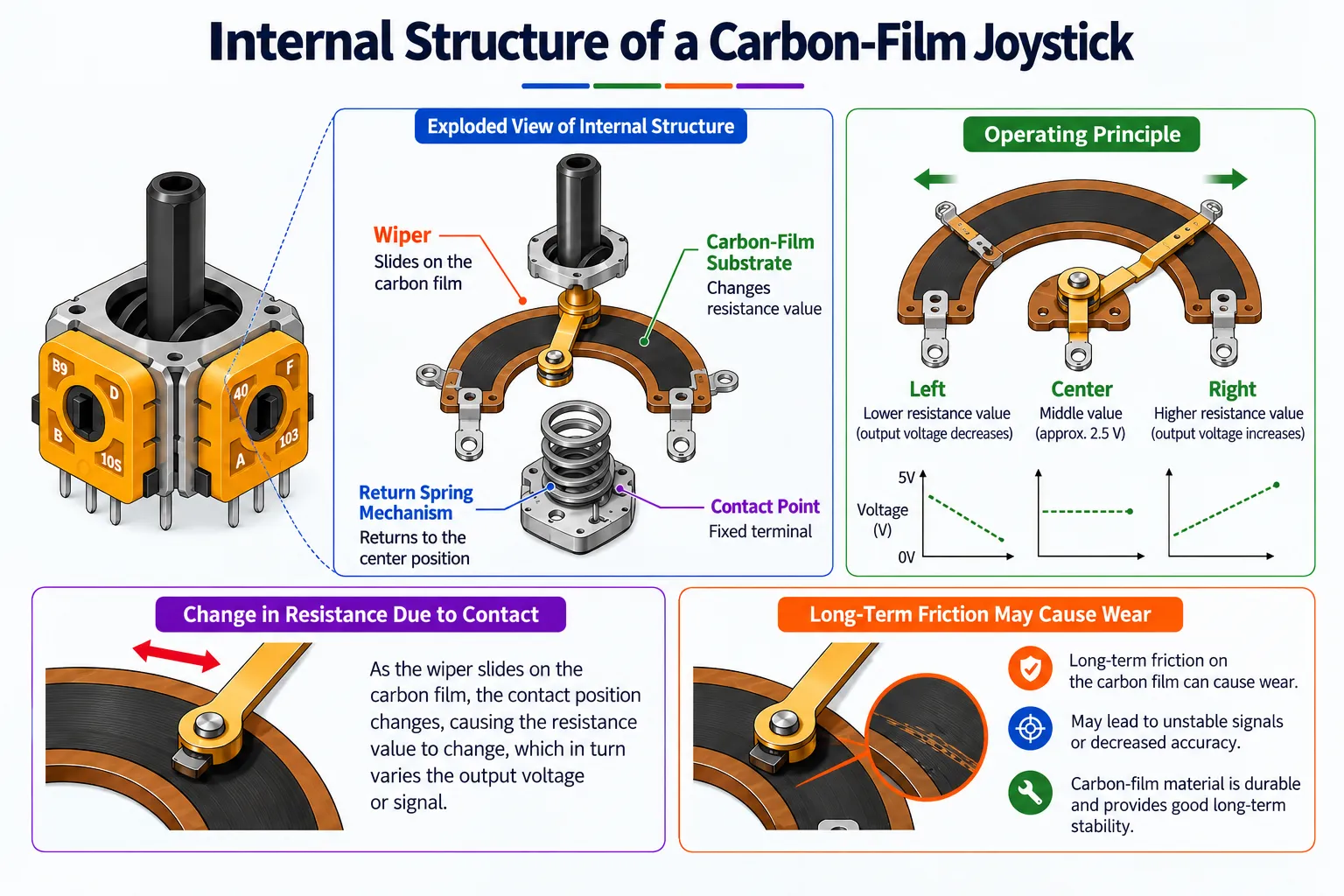
A carbon-film joystick, also known as a potentiometer joystick, is one of the most common types of analog joystick technology and is widely used in game controllers and various control devices. It works by moving a wiper across a carbon resistive track to change the resistance value. The system then converts these changes into directional and movement signals, allowing it to accurately reflect the user’s input.
Advantages of Carbon-Film Joysticks
- Signals are generated directly by the movement of the wiper across the carbon track, resulting in minimal latency and immediate response.
- The technology is mature and cost-effective to manufacture, making it widely used in entry-level and mainstream controllers.
- The relatively simple component design makes replacement and repair easier when damage occurs.
Disadvantages of Carbon-Film Joysticks
- Long-term friction can wear down the carbon track and generate carbon debris, causing resistance irregularities and potentially leading to joystick drift.
- Durability may decrease significantly under frequent or forceful operation.
- Dust or contaminants entering the internal structure may affect sensitivity and smooth operation.
What Is a Hall Effect Joystick? How It Works, Advantages, and Disadvantages
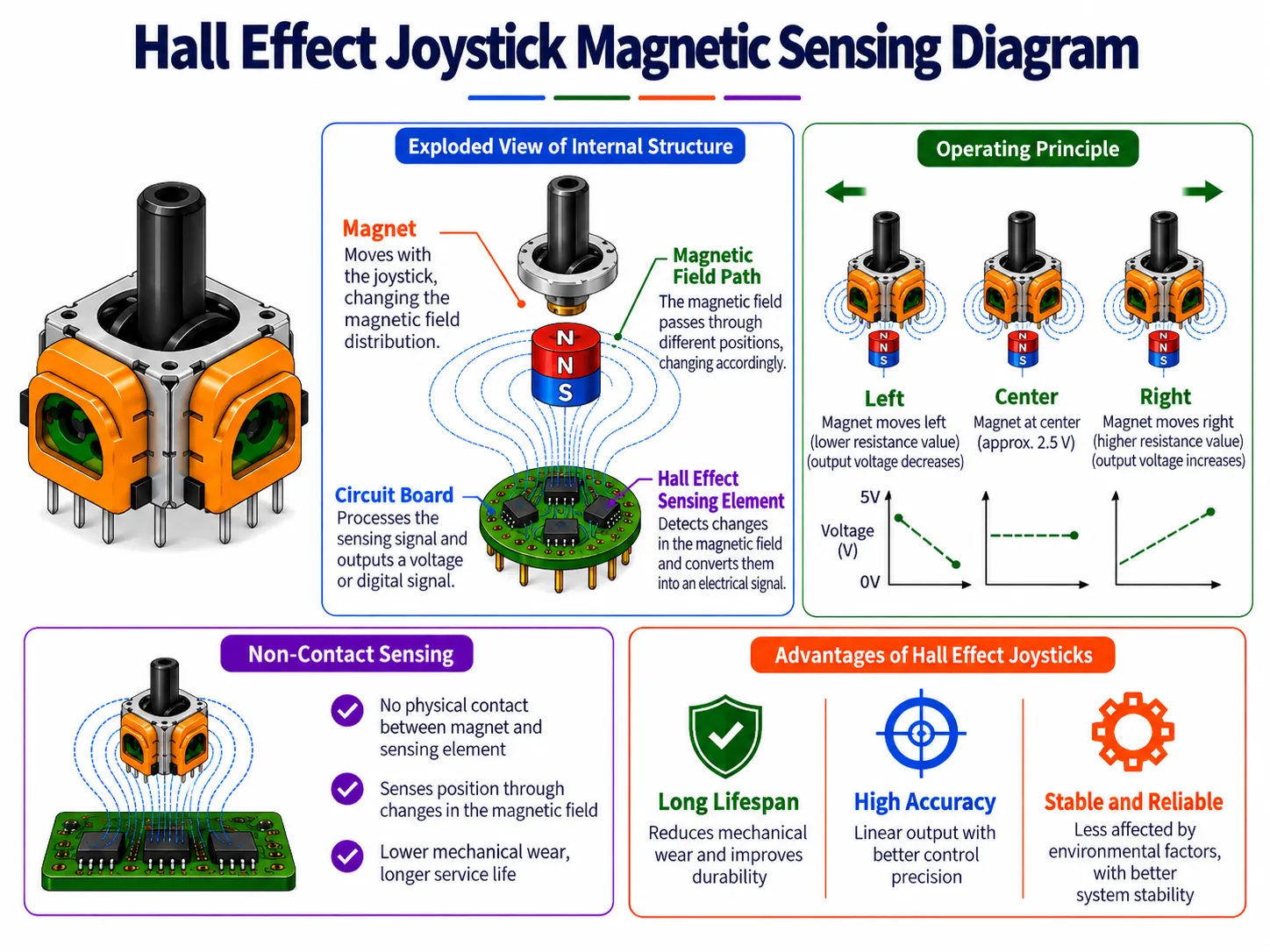
A Hall effect joystick is a type of analog joystick technology that operates using the Hall effect. Its key feature is that it can detect movement without requiring physical contact. Inside the joystick, magnets and Hall effect sensors are used to measure changes in the magnetic field. When the joystick is moved, the position of the magnet changes, causing the surrounding magnetic field to change as well. The sensor detects these changes and converts them into voltage signals, which the system then processes to determine the corresponding direction and movement input. Because this process does not rely on friction-based contact, Hall effect joysticks offer significant advantages in durability and stability.
Advantages of Hall Effect Joysticks
- No friction-based wear, significantly reducing aging and joystick drift.
- With no physical contact between sensing components, joystick movement is smoother and less prone to sticking.
- Dust and contaminants have less impact on operation, while performance remains relatively stable under temperature changes.
Disadvantages of Hall Effect Joysticks
- Magnetic-field sensing and signal conversion are required, which may affect response characteristics and ultimate precision compared with carbon-film joysticks.
- Strong external magnetic fields may interfere with sensing accuracy.
- More complex mechanical and circuit designs generally result in higher manufacturing costs than traditional carbon-film joysticks.
What Is a TMR Joystick? How It Works, Advantages, and Disadvantages
A TMR joystick (Tunnel Magnetoresistance joystick) is a non-contact magnetic sensing joystick technology that primarily detects changes in magnetic field direction. When joystick movement causes the internal magnet to shift, the angle of the surrounding magnetic field changes accordingly, resulting in changes in the resistance of the TMR sensing element. The system then calculates the joystick’s displacement direction and control signals based on resistance differences across different directions. This design reduces the contact wear associated with traditional carbon-film joysticks while improving signal sensitivity and operational stability.
Advantages of TMR Joysticks
- Combines the long lifespan of non-contact sensing with high precision and low latency comparable to carbon-film joysticks.
- Eliminates friction between wipers and carbon tracks, providing greater stability and reducing wear.
- Offers better overall power efficiency compared with other magnetic sensing technologies.
Disadvantages of TMR Joysticks
- Mechanical components can still age over time. Parts such as return-to-center springs may experience fatigue after prolonged use, potentially causing joystick drift.
- Power consumption is still higher than that of carbon-film joysticks because additional power is required for sensing and signal processing.
- As a relatively newer technology, TMR joysticks generally have higher component and manufacturing costs than carbon-film and Hall effect joysticks.
Frequently Asked Questions About Joysticks: 4 Common Questions Answered
Q: What Does Joystick Dead Zone Mean?
A joystick dead zone is a small buffer area around the joystick’s center position. Within this range, slight movements of the stick do not trigger any response in the game. This design helps prevent unintended movement when the joystick does not return perfectly to center or when minor input errors occur.
A smaller dead zone makes the controls more sensitive, which is often preferred by players who value precise control. However, if the dead zone is set too low, even a slight offset from the center may cause the character to move automatically, resulting in the common issue known as joystick drift.
Q: TMR Joystick vs. Hall Effect Joystick?
Both TMR and Hall effect joysticks use non-contact magnetic sensing technology, but they differ mainly in how signals are generated. Hall effect joysticks detect changes in the magnetic field and convert them into voltage signals, while TMR joysticks detect magnetic-field changes through variations in resistance and process these differences to generate output signals.
In practical applications, TMR technology can offer lower power consumption, high sensitivity, and high precision. However, TMR joysticks are generally more expensive. Both technologies also share a common limitation: their mechanical components can still wear or age over time, meaning joystick drift cannot be completely eliminated.
Q: How Do You Choose the Right Joystick?
When choosing a game controller, first confirm that it is compatible with your gaming platform, as this directly affects usability. Next, consider whether a wired or wireless controller better suits your needs. Wired controllers provide a stable connection but limit movement, while wireless controllers offer greater freedom but require charging.
Control feel is another important factor, including grip comfort, weight distribution, and surface materials, especially during extended gaming sessions. The sensing technology can then be selected according to your priorities: carbon-film joysticks are suitable for budget-conscious applications, Hall effect joysticks are a good option when durability is important, and TMR joysticks are worth considering when both precision and longevity are priorities. Features such as vibration feedback and analog triggers can also affect the overall gaming experience.
Q: Are Joysticks for Esports and Drones Different? What Are the Key Differences?
Yes. Although both may use non-contact magnetic sensing technologies such as Hall effect or TMR, their design priorities differ because of their operating environments and application requirements.
Esports joysticks are primarily designed for indoor gaming, with an emphasis on control feel, fine input precision, and low latency. These characteristics allow players to make quick and precise movements when aiming, moving, or controlling recoil. Drone joysticks, on the other hand, are often used for outdoor flight control. In addition to stable signal output, they place greater emphasis on water and dust resistance, temperature stability, and interference resistance to maintain reliable operation in environments involving dust, moisture, or temperature fluctuations.

Recommended Joystick Manufacturer: Favor Union
When selecting a joystick manufacturer, product performance is only one consideration. Supply stability, customization flexibility, and quality control are equally important. Favor Union has a highly vertically integrated manufacturing system, with approximately 97% of its products manufactured in-house. Even much of the automation equipment used in its factories is developed and built internally.
This integrated production model helps maintain greater control over quality, lead times, and costs, which is particularly important for businesses that require a stable and reliable supply. Favor Union’s key strengths in service and supply capabilities can be summarized in four areas:
- Flexible Customization: Specifications and designs can be adjusted according to project requirements, supported by efficient technical communication and engineering assistance.
- Flexible Lead Times: Compared with the standardized processes of larger manufacturers, production schedules can be adjusted more flexibly to accommodate project timelines.
- Global Support Network: Locations in Taiwan, China, Japan, and Hong Kong provide responsive support for EVT/DVT development and technical requirements.
- Flexible Shipping Options: With production facilities in both Taiwan and China, manufacturing locations and logistics arrangements can be adjusted according to different market requirements.
In terms of product capabilities and quality management, Favor Union also offers several key advantages:
- Comprehensive Quality Management: Production follows ISO and IATF standards to help ensure consistent product quality and reliability.
- Wide Range of Specifications and Customization Options: Products support a variety of applications, with selected models offering IP67-rated water and dust resistance.
- Flexible Supply Chain Support: Favor Union has helped customers quickly identify alternative solutions during component shortages, reducing the cost and time required for product redesign.
- Proven Market Applications: Products are widely used in unmanned systems, professional audio equipment, and various control devices.
Overall, Favor Union combines the advantages of Taiwan-based manufacturing and a diversified supply chain with strong capabilities in quality control, lead-time flexibility, and customization. For companies that value stable supply and long-term cooperation, Favor Union is a joystick manufacturing partner worth considering.
If you are evaluating joystick suppliers or require custom specifications or alternative component solutions, please contact Favor Union. Discussing your requirements directly with the team can help clarify technical options and feasible solutions while shortening development and decision-making time.
Recommended Reading: